

Timber, hardwood, bamboo or composite decking?
Scandinavian timber decking remains a timeless favourite for British garden design – an aesthetic choice that effortlessly complements both traditional cottage plots and sleek, contemporary urban spaces. As well as representing a cost-effective alternative to synthetic materials, natural timber decking can be periodically stained, oiled, or pressure-treated to protect against the UK climate or adapt to a changing garden colour scheme.
For homeowners looking for the character of natural wood with greater durability, hardwood decking is an excellent option. Fountain Timber’s Opepe hardwood decking has an orange-brown to golden-yellow colour and is highly resistant to fungi, insects and marine borers. It is also FSC® certified and reversible, so it can be installed with the castellation facing upwards or with the smooth side showing for a cleaner finish. Stainless steel screws should be used with this type of decking.
Bamboo decking also offers that desirable natural finish with strong environmental credentials. Bamboo decking is made from a fast-growing material that can be harvested in about 4 to 5 years, making it an environmentally friendly alternative to composite, plastic, or tropical hardwood decking. It also provides a stable, attractive board that works well in gardens and terraces.
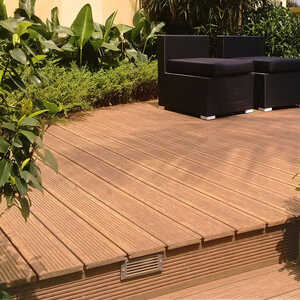
Composite decking is often chosen by those who want a low-maintenance finish with a consistent appearance. Fountain Timber supplies Millboard composite decking, a wood-free alternative to traditional timber. Millboard is designed to recreate the look of real timber while resisting warping, rotting and expansion. Its Lastane® finish is non-porous, anti-fungal, and highly slip-resistant, making it a strong choice for family gardens, commercial projects, and areas that need reliable performance year-round.
Why choose softwood timber decking?
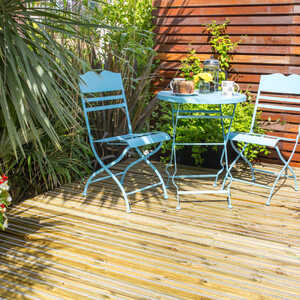
Softwood timber decking is an excellent choice for gardens, patios and commercial outdoor areas. Fountain Timber’s Scandinavian timber decking is made from quality, slow-grown Scandinavian softwood and pressure-treated for long service life.
The slow growth of the timber produces smaller knots and tighter growth rings, creating a strong and durable deck board. The Scandinavian deck board comes with a 15-year Treated-Right Performance Warranty, providing added reassurance for long-term outdoor use.
Timber decking does require ongoing care. Cleaning, treating and inspecting the boards will help maintain their appearance and performance. The level of upkeep will depend on the deck’s exposure, foot traffic and surrounding planting. In shaded or damp areas, algae can build up more easily, so regular maintenance becomes especially important.
For spaces where slip resistance is a priority, Fountain Timber also stocks an anti-slip deck board. This combines natural timber decking with hardened-aggregate anti-slip infills, helping improve grip in wet conditions and supporting safer use throughout the seasons.

Why choose hardwood timber decking?
Hardwood decking can bring a more robust, characterful finish to a garden. Opepe, also known as Bilinga or Kusia, is a durable tropical hardwood from West and Central Africa, with a rich colour that ranges from orange-brown to golden-yellow.
Its natural resistance to fungi, insects and marine borers makes it suitable for demanding outdoor applications, including decking, bridge timbers, marine work and heavy construction. For garden decking, that durability can be especially useful in exposed areas or projects where a stronger natural timber is required.
Fountain Timber’s Opepe hardwood decking is FSC® certified and reversible, giving you a choice between a castellated surface or a smooth, sleek finish. As with many hardwoods, it is important to use the correct fixings, and stainless steel screws are recommended.
Hardwood decking can be more expensive than standard softwood, but it offers a long-lasting and visually distinctive result. It suits projects where the decking is a key feature rather than a purely practical surface.

Why choose bamboo decking?
Bamboo decking is well-suited to homeowners who want a natural-looking deck with strong sustainability credentials. Bamboo grows extremely quickly compared with traditional timber species and can be harvested in around four to five years. This makes it an attractive alternative to composite, plastic or tropical hardwood decking.
Fountain Timber’s bamboo decking provides stable, durable boards that can be installed in clean patterns for a refined finish. The natural look works well in gardens, terraces and outdoor seating areas, particularly where the design calls for warmth and simplicity.
Bamboo deck board clips are also available, allowing for a hidden fixing system with matching screws. This can create a neater surface with fewer visible fixings, which is useful for modern garden designs where the detailing needs to feel clean and considered.
As with any decking material, correct installation and suitable substructure are essential. Bamboo performs well when fitted carefully, supported properly and maintained according to the manufacturer’s guidance.

Why choose Millboard composite decking?
For homeowners who want the look of timber with a highly refined, low-maintenance finish, Millboard composite decking brings a different level of performance to the project. Its wood-free composition helps protect the boards from warping, rotting, and contraction, making it well-suited to exposed gardens, busy family spaces, and commercial settings where the deck needs to withstand regular use.
The surface is one of Millboard’s strongest features. Its Lastane® finish has a realistic timber texture, while its non-porous construction helps resist stains, scratches, algae growth and fungal attack. It also offers strong slip resistance, including in wet conditions, which is particularly valuable on garden steps, routes between the house and lawn, balconies, poolside spaces and areas used throughout the seasons.
Because Millboard is a premium system, small details can make a visible difference. Durafix Trimhead Stainless Steel Screws are designed for the boards, helping installers achieve a secure and discreet fixing, while touch-up paint can be useful for finishing exposed edges or minor installation marks. Planning these items at the same stage as the boards helps avoid delays once the frame is ready and the layout has been confirmed.
Key factors to consider before selecting your decking
Before finalising your layout and purchasing materials, take a moment to evaluate your garden's specific landscape conditions and design goals:
Site Topography: Consider whether your site is flat or sloping. Challenging terrain offers a fantastic opportunity to build in multi-level platforms or steps to create zoning and structural interest.
Sun & Wind Position: Determine whether your deck will be in full sun, complete shade, or a mix of both. You can incorporate pergolas or arbours for shade, or pick moisture-resistant boards if damp, shady spots are prone to algae buildup.
Privacy & Boundaries: Determine if your deck will be overlooked by neighbours or open to public view. Assess whether existing trees, hedges, or buildings provide enough cover, or whether you need to add a custom trellis and screening.
Subsurface Services: Check the ground for hidden utility access, such as drains and manhole covers. Your deck frame can easily be designed to incorporate matching, removable hatch doors to keep these essential services accessible.
Household Usage: Construct your platform around how your family lives outdoors. Adults might require clear, open space for dining and entertaining, whereas family decks can integrate children's play areas and sandpits.
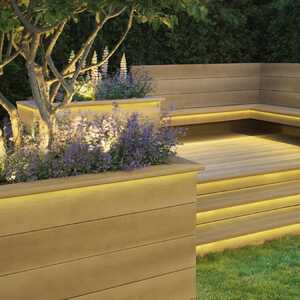
Integrated Features: Think about the custom elements you want to build into the structure. The design can seamlessly include low-voltage deck lighting, flush planter boxes, integrated bench seating, and structural arbours.
Architectural Styling: Choose a theme that complements your home, whether that is a sleek contemporary patio or a classic traditional look. Your selection of grooved or smooth boards, alongside matching handrails and balustrades, will define the final aesthetic.
Planning Permission & Regulations: Verify if your project requires local council approval before breaking ground. If your deck platform is raised above 300mm or covers more than half of your garden, strict regulations apply; please consult our Timber Decking Regulations Guide for detailed building standards.

Start your decking project with Fountain Timber
With the right planning, careful installation and suitable aftercare, your decking can become a lasting part of the garden, giving you a durable outdoor area for everyday use, entertaining and time outside.
As ever, this article shares insights and general advice with good intentions. Following this information is entirely at your discretion, and it is sensible to consult a professional if you are uncertain about any part of the project. Should you need further assistance with your purchase, the Fountain Timber team is here to help.
 Updating page...