

How to choose the right location for your greenhouse
Finding the best position for a greenhouse is one of the most important decisions you will make. In most gardens, a south or south-west facing spot will give you the strongest light levels throughout the day, which is especially useful in spring and autumn when every extra hour of sun helps. Try to place the structure away from anything that will cast heavy shade, such as trees, high hedges, boundary walls or nearby buildings.
Access also deserves proper thought at this stage. A greenhouse is far easier to use when water is close by, and electricity can also be helpful if you plan to add lighting, propagation equipment or heating during colder months. It is worth thinking about your route to the greenhouse, too. A short, dry, stable walk from the house or shed makes daily watering and checking plants much easier, particularly in winter or wet weather.
Shelter from the worst of the wind is useful, but full shade is not. The aim is to find a bright, open position that still feels practical to reach and pleasant to work in. If the greenhouse sits naturally within the flow of the garden, you are much more likely to use it consistently.
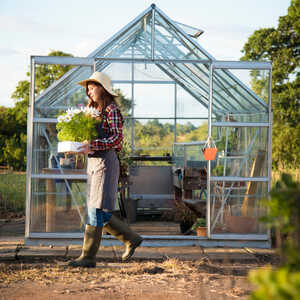
The importance of building a strong base for your greenhouse
Give your garden building a solid foundation
A greenhouse must stand on a stable, level and well-built base. Without that, doors can stick, glazing can sit poorly, and the whole structure can become harder to maintain over time. A proper base also makes the greenhouse safer, cleaner and easier to work in from day one.
If you're planning to build the timber framing and structural support yourself, C24 Timber should be your first investment. It is planed all around, kiln-dried, and pressure-treated, which makes it well-suited to projects that require strength and resilience.
For the floor area or surrounding working zone, Smooth Paving Slabs can create a neat, durable surface that is easy to sweep and comfortable underfoot. If you want to shape the area around the greenhouse, Wood Effect Sleepers can be used to edge paths, define adjacent planting zones or build a more structured working area.
The ground around the greenhouse also benefits from some thought. Decorative finishes such as Arctic White Chippings or Flamingo Chippings can help create a clean, free-draining border around the structure, reducing mud and giving the whole area a more finished appearance.
Choosing the right size and layout for your greenhouse
Small greenhouses can still perform an important job in the garden, especially for seed sowing and overwintering a few tender plants. Larger structures, however, are often easier to use well. They give you room to move, room to store equipment and room to organise crops properly. They also tend to cope better with temperature swings, as a greater volume of air changes more slowly than a very compact space.
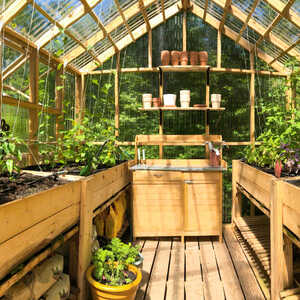
As you plan the layout, think about how you will actually work inside the greenhouse. You need enough space to water, pot on, check leaves for pests, tie in taller crops and harvest comfortably. A cramped layout quickly becomes frustrating, especially once plants are in full growth.
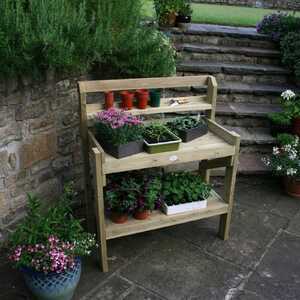
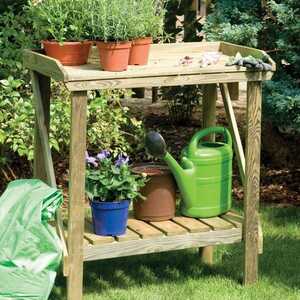
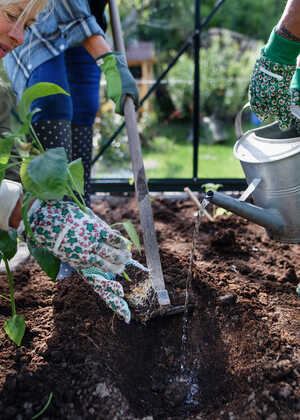
A good working surface makes a big difference. Fountain Timber’s Potting Bench is designed for sheds, greenhouses or outdoor use, with top and bottom shelves and a practical work surface for day-to-day jobs. The Utility Table offers similar flexibility and is equally useful for storing trays, pots, tools and compost while giving you a dedicated area for sowing and potting.
Managing temperature, ventilation and shading
Create a stable growing environment throughout the seasons
A successful greenhouse depends on creating the right conditions inside. Temperature, airflow, humidity and shading all need regular attention. During the growing season, many plants perform best when daytime temperatures stay within a comfortable range, and the larger goal is to avoid sharp extremes. On bright days, a greenhouse can heat up very quickly, even when the air outside still feels relatively cool. If temperatures rise too high, plants can become stressed, growth can stall, and foliage can scorch.
Ventilation is essential for keeping air moving and reducing excessive heat build-up. Roof vents, side vents and doors all play a role here, and they should be opened as conditions demand. Good airflow also helps reduce the risk of fungal disease and creates a healthier environment for seedlings, young plants and mature crops alike.
Humidity is important, too, especially for certain tender plants. One simple method is to place trays of pebbles beneath pots and add water so that, as it evaporates, it gently increases moisture in the air around the plants. At the same time, you still need enough ventilation to stop the atmosphere from becoming stagnant.
While light is vital for plant growth, direct summer sun can become too intense in glasshouses and bright greenhouses. Shading is often necessary during the warmest periods. External shading is usually the most effective approach, and shading paint remains a well-known low-cost method.
Inside the greenhouse, horticultural fleece or light fabric fixed to the brightest side can also help soften strong sun where needed. The aim is to keep conditions steady and usable, rather than allowing the greenhouse to swing from cold nights to excessively hot afternoons.
Using the right composts and soil products in your greenhouse
Build healthy growth from the roots up
The materials you use for sowing, potting and filling beds have a direct effect on plant health and performance. A good greenhouse set-up deserves equally reliable growing media, particularly when you are raising seedlings, potting on young plants or refreshing tired compost in containers and planters.
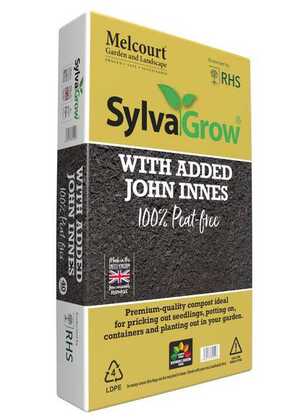
SylvaGrow® with added John Innes is a strong all-round option for greenhouse growing. It combines fine bark, woodfibre, coir, sterilised loam and sand, and it contains balanced nutrients for the first four to six weeks of growth. That makes it useful for a wide range of tasks where a stable, professional-style growing medium is helpful.
For everyday potting, container growing and general greenhouse use, Multipurpose Compost gives you a peat-free option made from sustainable raw materials, again with nutrients available for the first four to six weeks. If you are improving soil in greenhouse borders or raised beds outside the structure, SylvaGrow® Farmyard Soil Improver adds organic matter, slow-release nutrients and improved water-holding capacity. For levelling, filling or preparing larger planted areas, Topsoil Blended Loam offers a fine, easy-to-handle topsoil that is virtually stone-free.
Choosing the right growing medium helps reduce setbacks later. Seedlings establish more reliably, container plants stay healthier and productive crops have a better foundation from the outset.
Making the space around your greenhouse work harder
A greenhouse works best when it is treated as part of a wider gardening zone rather than as a stand-alone structure. The surrounding area can support storage, composting, overflow growing and seasonal planting, all of which make the greenhouse itself less cluttered and easier to manage.
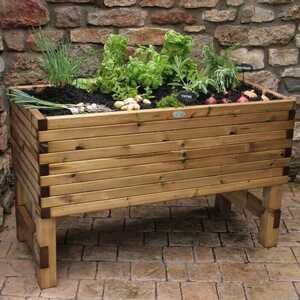
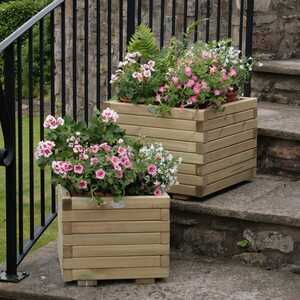
Raised growing spaces from Fountain Timber's Planters, Raised Beds & Borders range can be used to harden off young plants, grow crops that do not need full greenhouse protection, or create a more varied planting scheme around the structure. A Raised Vegetable Planter is especially useful where access and convenience are priorities.
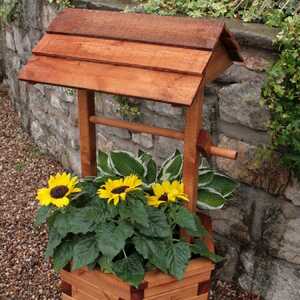
This is also a good area to think about presentation. A greenhouse often becomes a focal point in the garden, so the space around it should feel considered. Chippings, sleepers and carefully placed planters can make the area look tidier while also improving drainage and making the greenhouse easier to reach throughout the year. If you want to soften the look, the Wishing Well Planter can add colour and character close to the entrance with seasonal planting.
Keeping your greenhouse productive all year
Small regular jobs lead to better results
Once your greenhouse is in place and properly equipped, regular upkeep becomes the key to getting the best from it. Check plants often, especially in changing weather, as greenhouse conditions can shift quickly. Watering needs vary through the year, and plants in pots will usually dry out faster than those in borders or deeper beds. Keep surfaces clean, clear away old leaves and empty pots, and make sure vents and doors are functioning well.
As seasons change, the greenhouse can take on different roles. In late winter and early spring, it is ideal for seed sowing and bringing young plants on. Through summer, it becomes a place for heat-loving crops and ongoing propagation. In autumn and winter, it can protect tender plants, store more delicate containers and provide a sheltered space for maintenance jobs when the rest of the garden feels less inviting.
A well-planned greenhouse gives you more control, more flexibility and more opportunities to enjoy gardening through the year. If you'd like any further guidance on greenhouse base construction, planting products, growing media, or any other topics covered in this article, please don't hesitate to get in touch. We're here to help.
The information and advice in this article are provided in good faith and are designed to give general information and guidance. Any reliance you place on such information is therefore strictly at your own risk. If in doubt, we strongly recommend you seek professional assistance.
 Updating page...