

The importance of fence maintenance
Most modern fencing supplied by Fountain Timber is pressure-treated to improve resistance to decay, but that treatment is not a complete, lifetime solution. UV light from the sun slowly fades and dries the surface, and moisture can cause boards to swell, shrink and eventually split.
A protective finish such as paint, stain or oil forms a barrier against water and slows down the impact of sun and frost. It also helps to keep the timber looking fresh, whether you prefer a natural tone that blends into the background or a bold colour that makes more of a feature of your fence.

How often should you treat your fence?
Spot the early warning signs
There is no fixed schedule for recoating a fence as exposure, aspect and local weather all play a part. A sheltered fence in a mild climate will generally last longer between treatments than one that faces prevailing wind and rain.
A useful guide is to watch how water behaves on the surface. If rain still forms beads and runs off, the finish is doing its job. Once water starts to soak into the boards instead of sitting on top, it is time to clean and recoat. For many gardens, this will be every two to three years, although some very exposed fences may benefit from attention a little more often.
Cleaning your fence
A key step in the process
Before you apply any new finish, the timber should be as clean and dry as possible. Dirt, algae and old, loose coatings prevent fresh treatment from soaking in and bonding properly.
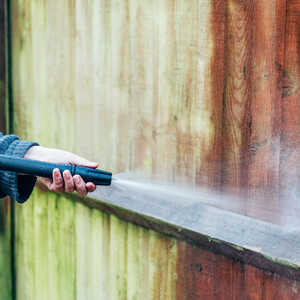
Begin by brushing away cobwebs, dust and loose debris. If your fence is solid and in good condition, you can use a pressure washer on a gentle setting, keeping the lance moving so that you do not damage the surface. For older or more delicate sections, a stiff brush and a bucket of warm, mildly soapy water is usually enough.
Any green or black mould should be scrubbed away with a diluted bleach solution, taking care to protect nearby plants and to follow the instructions on the container. Once cleaned, allow the timber to dry completely. This may take a day or two in cooler or damp conditions. Starting to paint while the wood is still damp can lead to poor adhesion and patchy results.
Making repairs before you paint
Cleaning is the perfect time to stand back and look for any damage. Check for:
Boards that have split or rotted at the ends
Loose nails or screws
Wobbly posts or rails that have shifted in the wind
Any sections that are rotten or badly damaged should be replaced rather than coated, as no finish will restore structural strength. Sound boards with minor surface splits can normally be left in place once you are happy they are secure.
It is also helpful to clear away any soil, mulch or dense planting that is hard up against the base of the fence. Keeping the bottom of the boards free to dry out more quickly will help reduce the risk of decay over time.
Choosing paint or woodcare for your fence
Explore the Fountain Timber Range
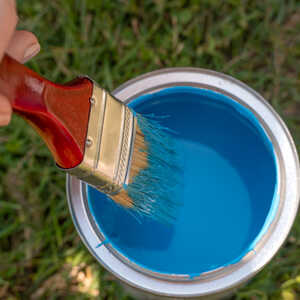
Once your fence is clean, dry and sound, you can choose how you would like it to look. Traditional stains and oils enhance the natural appearance of the timber and usually leave some of the grain visible. Opaque paints give stronger colour and can be used either to match other features in the garden or to create a striking contrast.
At Fountain Timber, you will find an extensive range of timber preservers and woodcare products, including treatments, stains, oils and specialist fence paints suitable for different types of garden timber.
Bird Brand One Coat Shed & Fence Paint
Quick coverage for rough-sawn timber
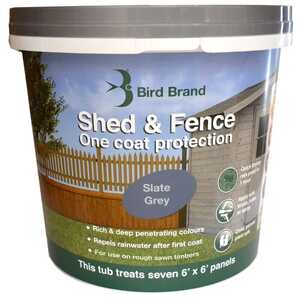
For rough-sawn fencing, sheds and trellis, Bird Brand One Coat Shed & Fence Paint is designed to give good coverage and water repellency in a single coat. It is a wax-enriched timber treatment that helps to repel water from the surface, making it ideal for garden boundaries and structures exposed to the weather.
Once dry, it is safe to use around plants and pets, which is especially helpful in planted borders. A 5 litre tin typically treats around seven fence panel sides, although the exact coverage will depend on how absorbent the timber is.

Thorndown Wood Paint
Colour, durability and low odour
If you would like a broader palette of colours or a smooth, modern finish, Thorndown Wood Paint is a high-performing option. The range can be used on most types of exterior and interior timber, so you can coordinate fencing with garden buildings, planters or furniture.
The paint is water-based with virtually no VOC content or odour, making it more pleasant to work with, and it creates a hard-wearing, long-lasting coating that keeps its appearance for years. Each colour in the range is inspired by the local Somerset landscape and wildlife, giving you a choice of subtle natural shades and bolder tones.
Treatex® Classic Colour Collection
A premium opaque finish
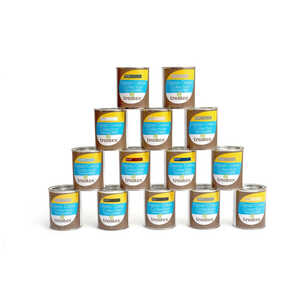
For a premium opaque finish, Treatex® Classic Colour Collection offers strong, durable colour made from natural, sustainable raw materials such as sunflower oil, soybean oil, beeswax and carnauba wax. The product has been tried and tested in challenging environments, including coastal and mountain locations, and is suitable for all types of timber.
It is a versatile choice that can be used on fences, sheds, doors, windows, cladding, garden furniture and other joinery, both inside and out. As a guide, 1 litre covers approximately 25 square metres in one coat, depending on the timber and how it is applied.
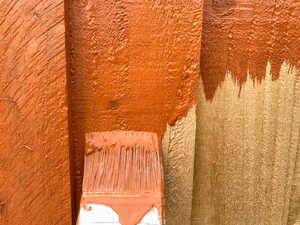
How to apply paint or stain
Check the forecast and choose a dry spell with no rain expected for at least 24 hours. Mild, still days are ideal. If possible, work when the fence is in shade rather than full sun, as direct sunlight can cause the finish to dry too quickly on the surface and reduce the level of penetration into the timber.
Stir the tin thoroughly before you start. You can apply most fence paints and stains with a brush, roller or suitable sprayer. A roller or sprayer is useful for covering larger areas quickly, but a good quality brush is still essential for edges, around fixings and between overlapped boards.
Take particular care near walls, paving and planting. Use dust sheets where needed and work slowly around delicate shrubs or borders. For overlapped featheredge boards, make sure you work the product into the joints without applying so much that it drips.
Always work in the direction of the grain, starting at the top and working down so you can smooth out any runs as you go. Follow the manufacturer’s instructions on how many coats are recommended and how long to leave between them. Even when a product offers good coverage in a single coat, a second coat often improves durability and depth of colour.
Build a long-lasting fence with Fountain Timber
A carefully maintained timber fence will frame your garden, support planting and provide privacy while standing up to the British weather.
Explore our full range of timber preservers and woodcare products to find the right finish for your fence and other garden timber.
The information and advice in this article are provided in good faith and are intended as general guidance only. Any reliance you place on it is at your own risk. If you are unsure about any aspect of fence maintenance or treatment, we strongly recommend seeking professional assistance.
If you need further advice with your purchase, please ask our experienced staff, and we will be happy to help.
 Updating page...