

Fountain Timber Guides
How To Construct
A Garden Pergola
A pergola adds structure to a garden and creates a natural place for climbing plants, lighting, or a defined seating area. This guide sets out the same core steps we use when talking customers through a straightforward four-post pergola build, with the key checks and preparation that help the job run smoothly. If you are building from scratch rather than using pre-cut components, you can source suitable materials from our construction timber range linked below.
BEFORE YOU START
Checks, preparation and the tools you will need
Start by confirming you are happy to erect a structure of this size in your garden and, where relevant, check if you need permission. It's also a good idea to consider your neighbours before any work begins. Make sure the finished height will not obstruct your view or your neighbours’ view, and if the pergola is being constructed near a property, plan the area so rainwater runoff slopes away from the building.
Next, check for utilities and any drainage problems before you dig. Take time to clear the base area properly so you are working on stable ground. Remove grass, rubble, and anything else that would stop you from setting out accurately.
Tools required
Finally, gather your tools before you begin and keep them within easy reach. A basic kit typically includes a spirit level, tape measure, string, plumb line, screwdrivers, hammer, and a shovel or post hole digger for the posts.
Once you have everything on site, lay out all the project parts so you can identify each piece clearly and confirm you have the correct fittings. Wear suitable protective clothing throughout, including sturdy work boots, gloves, and goggles where appropriate.
Planning your pergola components
The exact sizes and quantities will depend on your design, but most simple pergolas use:
4 vertical posts for the main support
2 main beams fixed across the top length of the structure
Top rafters spaced evenly across the width
Diagonal braces in the corners for extra rigidity
As a guide, many garden pergolas are built to suit a patio, seating area, or path. For example, you might build a compact pergola over a bench or a larger one to frame an outdoor dining table. The same build principles apply whichever size you choose.
If you experience any difficulties constructing your pergola or need guidance selecting the correct materials, please contact us, and we will be happy to help.
Step-by-step: constructing your pergola
Step
Begin by marking out your footprint. Set out the four corner positions for your pergola and check the layout carefully before digging. Make sure the shape is square and aligned correctly within your garden space, especially if you are positioning it alongside a patio, fence, or pathway. Dig your post holes and fix the four posts in place. Many customers choose to use the high-performance concrete PostMix to help secure the posts firmly in place.
Step
Once the posts are set, fix the two main beams across the tops of the posts to form the main frame. Positioning will depend on your design, but take time at this stage to level the front and back of the frame so everything is square and consistent before you build upwards.
Step
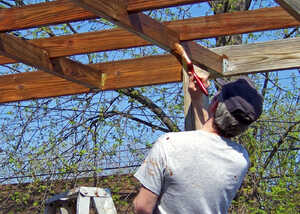
At the frame level, fix the top rafters evenly spaced across the main beams. This creates the main run of timbers across the top of the pergola and sets the look of the finished structure, so it is worth measuring the spacing carefully for a clean, balanced finish. Some customers, for instance, prefer a tighter spacing for a more enclosed look, while others leave wider gaps to allow more light through.
Step
To add rigidity, fix diagonal braces into the corner positions where the posts and beams meet. These bracing pieces help the structure feel tighter and more stable, particularly once the pergola is exposed to wind and changing weather.
Finishing touches and protection
Once the pergola is assembled, a considered finish can make a big visual difference, especially if the structure is a focal point in the garden.
If you are planning to paint, choose a product designed for timber and exterior performance. Our Thorndown Wood Paint range is water-based, low odour, and hard-wearing, with a wide choice of colours if you want something softer than a standard brown treatment.
If you are building from scratch, selecting straight, graded timber for posts and main beams will also help the final structure look cleaner and stay true. You can browse suitable options in our construction timber range and choose sizes that match your design and loading requirements.
How can we help?
The information and advice in this article is provided in good faith and is designed to give general information and guidance. Any reliance you place on such information is therefore strictly at your own risk. If in doubt we strongly recommend you seek professional assistance.
If you need further advice with any purchases, please ask our experienced staff, we will be happy to help!
 Updating page...