

What to consider before building a panel fence
Before ordering materials, it helps to be clear about what your fence needs to do. Some gardens need strong boundary fencing that can cope with exposed conditions. Some need privacy between neighbouring properties. Others, meanwhile, need a more decorative panel that complements planting schemes, patios or a contemporary garden design. The function of the fence will shape your choice of panels, posts and finishing details.
It is also worth looking closely at the ground line before you begin. A straight run on level ground is usually the easiest option, but many gardens have gentle slopes or uneven sections that need stepping. Marking the fence line before work begins will help you understand where the posts should sit and whether the finished fence will need to rise or fall in stages.
If you are replacing existing panels rather than starting from scratch, check your measurements carefully before ordering. Fence panels are commonly sold at 6ft or 1.8m wide, but replacement work can catch people out. Some older panels measure 1.83m, while others are only 1.8m, which means they may not fit neatly between existing posts. A few minutes with a tape measure at the beginning can save a lot of frustration later.
Which fence panels are best for your garden?
Match the panel style to privacy, strength and appearance
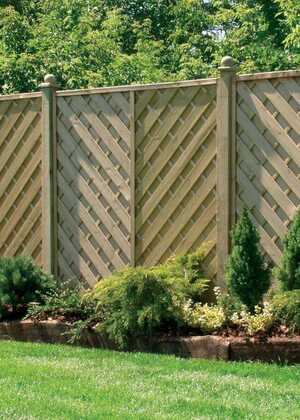
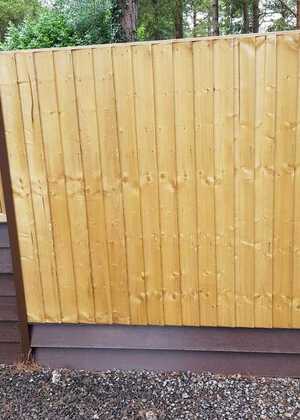
The right panel depends on the look you want to achieve and the practical demands of the site. If strength is the priority, a framed panel such as the Premium Closeboard Panel is a dependable choice for demanding locations. Its robust construction makes it particularly useful where the fence is likely to face stronger weather or heavier day-to-day use. The Pressure Treated Feather Edge Fence Panel is another excellent option and remains a very popular style for gardens that need durability and privacy in a more traditional format.
If you are looking for a neater, more enclosed finish, the Tongue & Groove Fence Panel offers solid-framed construction with tightly fitted boards that add strength and can help reduce noise. This style works well in gardens where screening and a more refined appearance are both important.
For customers who want decorative fencing with a more design-led finish, Fountain Timber’s range includes styles that bring in light, shape and texture without losing their practical purpose.
The Harmony Double-Sided Panel has a premium painted finish and a high-quality double-sided appearance, making it a good option when both sides of the fence remain visible. The Cheshire Fence Panel allows freer airflow while still providing privacy and protection, which can be useful in more exposed gardens.
The Somerset Omega Fence Panel adds a softer wave-shaped top and a hit-and-miss style that helps break the force of the wind. For a clean, contemporary look, the Warwickshire Panel gives a slatted, pressure-treated finish with privacy from both sides.
Pressure treatment provides fence panels with valuable protection, but decorative panels require proper installation and ongoing care. Light-framed panels with infill sections should not be placed in direct ground contact and should benefit from regular treatment throughout their lifetime. Using a gravel board beneath the panels and keeping soil away from the fence face will help them last longer and continue to look their best.
What type of fence posts should I use?
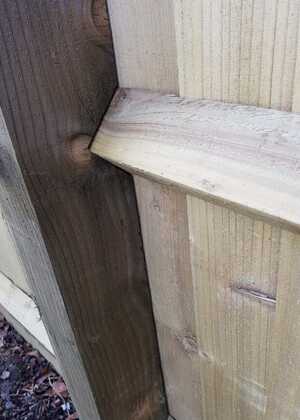
Fence posts do the structural work of the whole run, so it is worth choosing them carefully. Fountain Timber’s posts for fencing and gates include softwood posts in a range of sizes, pressure-treated to UC4 for ground contact. For lower fences in more sheltered positions, 75mm x 75mm timber posts are often suitable. For taller fences or more exposed sites, 100mm x 100mm posts are usually the better option. If appearance is a priority, planed timber posts can give a cleaner finish than sawn posts.
Timber is a classic choice, but it is not the only one. Concrete posts can be a practical solution when longevity and rigidity are priorities, and slotted concrete H posts also simplify installation because the panel can slide into place between the posts. Fountain Timber also offers DuraPost® fencing, a galvanised steel system manufactured in the UK that gives a more modern, low-maintenance framework for fence panels and boards. DuraPost is a strong option for customers who want durability with a more streamlined appearance.
Whichever material you choose, the post length needs to suit the installation method. If you are using post spikes, the post can usually be the same length as the height of the panel. If the posts are being dug in, a common recommendation is to allow 600mm in the ground. That means a 1.8m high panel would usually need a 2.4m post. In stony or made-up ground, digging in can often be the safer and more reliable option.
Do I need a gravel board when installing fence panels?
Keep the panel clear of standing water and soil
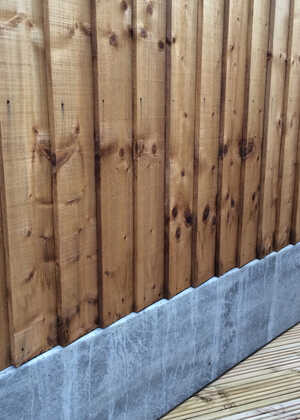
A gravel board is one of the simplest ways to extend the life of a panel fence. Its job is to lift the panel clear of the ground so that the lower edge is less exposed to standing water, damp soil and day-to-day splashback. This is especially useful for timber fencing, where repeated moisture at the base can shorten the life of the panel over time.
Fountain Timber supplies both a timber gravel board and a concrete gravel board, giving you a choice depending on the rest of the fence design. A timber gravel board can work well where you want a more consistent all-timber look. A concrete gravel board can be a smart choice where you want extra resistance to ground-level wear. Gravel boards are commonly 150mm x 25mm, but it is always important to check that the gravel board and panel are the same length.
Because a gravel board increases the overall height of the visible fence above ground, you may need a longer post to keep at least 600mm of the post below ground level. Decorative panels benefit particularly well from this approach, as keeping them away from direct ground contact reduces the risk of fungal or insect attack over time.
How to measure a panel fence correctly
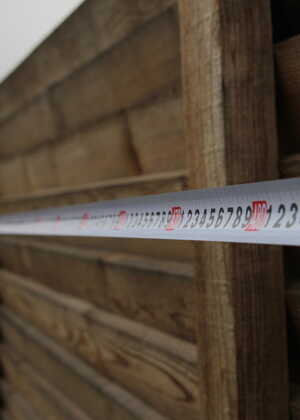
Accurate measuring is one of the most important parts of the job. Start by measuring the total run of fence and then dividing that length by the width of your chosen panels. Remember to include the posts in your planning and allow one additional post to finish the run. If you are concreting the posts in, it is also sensible to allow one bag of Postmix or equivalent per post, although site conditions can affect the exact amount needed.
If you are fixing panels between timber posts with clips, the type of clip you choose will affect the spacing. That means your post centres should not be marked out until you know which fixings you intend to use. This is particularly important when replacing existing panels or working within a tight boundary line, where even small differences can become noticeable.
Replacement projects need extra care. A fence that appears to use standard 6ft panels may actually have openings sized for 1.83m panels rather than 1.8m panels. It is always worth measuring the actual gap between existing posts rather than relying on an assumption. The same care applies to gravel boards, which should match the panel length for a clean and secure installation.
How to build a panel fence step by step
Prepare the line, set the posts and attach the panels in sequence
Begin by clearing the fence line of old fencing, roots, undergrowth and loose debris. Once the area is clear, peg out the line so you can see exactly where the fence will run. If the ground slopes, decide at this stage how the steps in the fence will work. Taking time over the layout helps the finished run look much more deliberate and professional.
For safety, wear stout gloves and safety boots, and use safety glasses if you are working with power tools. Standard tools for the job usually include a hammer, spirit level, long crowbar and post hole diggers or shuv-holers. If you are using drive-in post spikes, a drive-in tool is also important because it protects the top of the spike from damage during installation.
If you are using post spikes, start with a pilot hole made with a bar and drive the spike in gradually, checking regularly that it remains square. If you are digging the posts in, keep the hole as small as practical, add around 100mm of gravel or similar to the bottom for drainage, then position the post and brace it with temporary struts. Once the post is correctly placed, infill with Postmix and bring the concrete up to ground level, ideally sloping it slightly away from the post so water drains off rather than collecting around the base.
As you work along the run, keep checking that each post is upright, square to the line and spaced correctly for the panel and fixings you are using. The first panel can then be attached to the first post and used as a guide when setting the second post. This often makes it easier to maintain a consistent height and spacing. Continue the same process panel by panel, checking alignment as you go rather than trying to correct mistakes at the end.
Why choose DuraPost for panel fences?
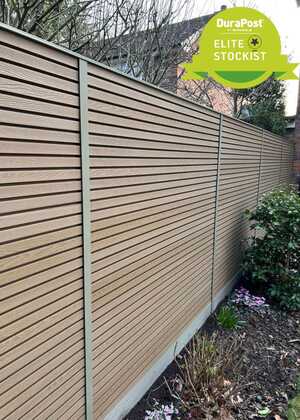
For many gardens, DuraPost offers a very practical alternative to traditional timber or concrete posts. The system is designed to be easy to handle and simple to install, while also giving a clean and contemporary finish. Because the posts are made from galvanised steel, they resist the usual problems associated with timber in ground contact, such as rot, splitting and insect damage.
The DuraPost® fencing range works well with a variety of infill options, including timber and composite panels, and it also includes accessories such as the Dura Composite Gravel Board for a coordinated, low-maintenance base detail. If you want a fence that is quick to install, visually crisp and built for long-term performance, DuraPost is well worth considering.
It is particularly useful for customers who like the warmth of timber panels but want a post system with a more modern engineering approach behind it. It also suits projects where ease of installation and a neat final appearance are both high on the list.
How to protect a timber fence after installation
Keep the finish in good condition and reduce long-term wear
Pressure treatment gives timber fencing strong protection against decay, and it remains the right starting point for a long-lasting fence. Even so, regular maintenance will improve performance and appearance over time. Sun, rain and seasonal moisture changes all affect timber. Boards can expand and contract with the weather, painted surfaces can gradually fade, and any section left in constant contact with wet soil is likely to age faster than the rest of the fence.
For that reason, it is good practice to keep soil and plants away from the face of the panels, fit gravel boards where possible, and inspect the fence from time to time for signs of wear. Decorative panels need particular care because they are made from lighter framing and infill timbers. Fountain Timber offers a free 10-year replacement undertaking on treated products intended for ground contact, such as posts. Fence panels are not covered by that undertaking because light-framed manufactured products cannot be treated to the same standard for direct ground contact.
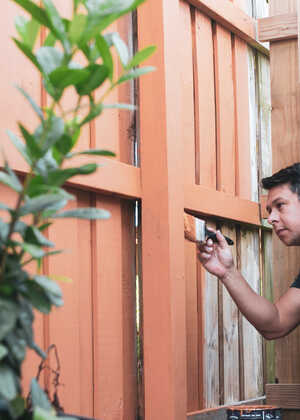
If you want to add another layer of protection and refresh the appearance of the fence at the same time, a quality finish can make a real difference. For rough-sawn boards and traditional featheredge fencing, Bird Brand One Coat Shed & Fence Paint is a strong, practical choice. If you want broader colour options with low environmental impact, Thorndown Wood Paint is often the answer. For a premium, weatherproof finish, Treatex Classic Colour Collection offers durable coverage and a refined look. Apply finishes in dry conditions, work along the grain, and make sure the overlaps and edges are coated evenly.
How can we help?
A strong panel fence usually comes down to a few simple principles. Choose panels that suit the job, use properly treated posts of the right size, keep timber clear of direct ground contact, and take care over setting out and alignment. A fence built with those basics in mind will look better on day one and hold up better in the seasons ahead.
If you are unsure which combination of panels, posts and accessories is right for your garden, Fountain Timber offers a broad range of products and practical guidance to help you plan the job properly. From heavy-duty boundary panels to decorative contemporary styles, and from UC4 timber posts to concrete and DuraPost systems, there are options to suit both traditional and modern garden projects.
The information and advice in this article is provided in good faith and is designed to give general information and guidance. Any reliance you place on such information is therefore strictly at your own risk. If in doubt, we strongly recommend you seek professional assistance.
 Updating page...